Stopping to admire a cascading waterfall is a great reward for a hard day hiking the trails. And best of all, it doesn’t cost anything to pause and appreciate these natural wonders. In this article we tell you where you can find the world’s 10 best waterfalls.
Bridal Veil Waterfall, New Zealand
It takes less than an hour to hike from New Zealand’s Treetop Lodge to the majestically misty Bridal Veil Waterfall. The forest that surrounds it is some 800 years old, so the walk is just as impressive as your final destination. It’s all part of what the locals call Wai-O-Tapu Thermal Wonderland, a steamy stretch of parkland with bubbling hot sulfur streams.
Mele Cascades, Vanuatu
Waterfalls aren’t usually on the top of the wish lists of thrill-seeking travelers, but Mele Cascades in Vanuatu deserves to be. Adrenalin junkies can abseil down the face of the falls, while those with weaker hearts can splash about at the bottom. What a fun way to cool down after enduring the steep climb to the summit! There is an entrance fee of 1500 vatu, but at around $16.50US it’s not exorbitant for the experience.
Bang Pae Waterfall, Thailand
Bang Pae Waterfall is the largest fall on Thailand’s popular tourist island, Phuket. It drops down some 55 feet from a cliff face to pools below. Many are small, but a few are large enough for swimming if you feel like a dip. While you’re there, keep your eyes peeled for some of the furry locals. The Bang Pae Waterfall is home to the Gibbon Rehabilitation Project, a scheme which reintroduces domesticated apes to the wild.
Barron Falls, Australia
Travel down the McDonald Track in Queensland’s Barron Gorge National Park to see the thundering power of the Barron Falls. You won’t be able to get up close and personal with this natural wonder, but you’ll get a great view from the nearby Wrights Lookout. If you’d prefer to save your legs you can also see the falls from the Kuranda Scenic Railway or the aerial tram known as the Skyrail. It’s little more than a trickle during the crowd-pleasing dry season though, so visit during the wet season (November to April) to see it in all its glory.
Zoe Falls, Australia
The Australian state of Queensland punches well above its weight when it comes to waterfalls. If Barron Falls didn’t give you your fill, take the trip to Zoe Falls on the idyllic Hinchinbrook Island. The waterfall cascades down into a crocodile-free saltwater swimming hole. It’s the perfect spot for a break from the steamy conditions of the 20-mile Thorsborne Trail.
Dudhsagar Falls, India
This is another waterfall for our lazier readers. You can access it by hiking for close to seven miles along Goa’s Kulem Route, but if that sounds like too much effort you can just catch a train! The local railway passes right by the impressive 984-feet fall. If you’ve got the time and energy though, it’s worth taking the trail so you can stop to admire its beauty. Just be prepared for one serious trek!
Dettifoss, Iceland
Dettifoss is regarded as the centerpiece of Jökulsárgljúfur, Iceland’s equivalent of North America’s Grand Canyon. It’s Europe’s most powerful waterfall, but its appeal is about more than sheer force. It’s impressive to watch glacial meltwaters rushing down the 145 feet precipice. If Dettifoss makes you hungry for more you’re in luck; it’s surrounded by three more large waterfalls.
Plitvice Waterfalls, Croatia
This beautiful network of falls makes the lush green forests of Northern Dalmatia that much more beautiful. Forget about sweating it out on difficult tracks. The locals have built boardwalks which take you over, under, and around these impressive cascades. These pathways make it easy to explore the area, so you needn’t be a fitness junkie to visit!
Cachoeira do Buracao, Brazil
You might not be able to pronounce it, but you should definitely visit Cachoeira do Buracao if you’re ever in Brazil. The striking waterfall drops some 262 feet down enormous circular cliff faces. No wonder its name translates to Big Hole Waterfall! The water below is also perfect for swimming.

Niagara Falls, North America
No list of the world’s best waterfalls would be complete without mentioning Niagara Falls. However the inclusion of this Great Lakes tourism highlight may be cheating just a bit, as Niagara is actually three falls that run along the border of the United States of America and Canada. That’s to take nothing away from them though. There’s a reason why these beautiful falls are the best known in the world. Cross the Rainbow Bridge to travel from one side of the Horseshoe Falls to the other, take the Maid of the Mist boat ride, or join one of the many organized Niagara Falls tours. A tour is the most expensive option, but it can make a visit to this popular tourist attraction run more smoothly.
While man is capable of creating impressive buildings and artworks, these waterfalls remind us of the natural wonders worth appreciating on our vacations. Just remember to travel responsibily, and leave these natural marvels in pristine condition so they remain just as beautiful for generations to come!
 And finally, if you can afford the flight it’s worth checking it to
  New Zealand also continues to party right through winter. There are events throughout the country to celebrate the Maori New Year, or Matariki, in June. Visit in August and you can indulge in some of the country’s best cuisine at
 The book's appeal goes beyond the obvious financial perks though. It's a great way to discover your holiday destination, with details about tourist attractions and sample menus for the best restaurant. You'll likely learn about a few places you never would have seen otherwise.
If you already own an Entertainment Book, you'll save money on getting another edition. If you're new to the Entertainment Book phenomenon, you can buy one through
The book's appeal goes beyond the obvious financial perks though. It's a great way to discover your holiday destination, with details about tourist attractions and sample menus for the best restaurant. You'll likely learn about a few places you never would have seen otherwise.
If you already own an Entertainment Book, you'll save money on getting another edition. If you're new to the Entertainment Book phenomenon, you can buy one through  It’s worth making a detour to see Mount Taranaki, an extinct volcano which looks a lot like Mount Fuji. Short treks around the summit's base can be tackled at any time of year, but the long trails can get boggy underfoot during winter.
A soak in the Taranaki Mineral Pools is ideal for soothing tired muscles after a long day catching waves. Finally there’s the Elvis Presley Museum at Hawera. It's a world away from Graceland, but Elvis enthusiast Kevin Wasley has assembled an impressive range of memorabilia and merchandise.
It's a shame to come to the end of Surf Highway 45, but from there it's not too far to the culture of Wellington or Mount Ruapehu's ski slopes!
It’s worth making a detour to see Mount Taranaki, an extinct volcano which looks a lot like Mount Fuji. Short treks around the summit's base can be tackled at any time of year, but the long trails can get boggy underfoot during winter.
A soak in the Taranaki Mineral Pools is ideal for soothing tired muscles after a long day catching waves. Finally there’s the Elvis Presley Museum at Hawera. It's a world away from Graceland, but Elvis enthusiast Kevin Wasley has assembled an impressive range of memorabilia and merchandise.
It's a shame to come to the end of Surf Highway 45, but from there it's not too far to the culture of Wellington or Mount Ruapehu's ski slopes!
 [/caption]
A day at the Waiwera Infinity Thermal Spa Resort may be enough to help you unwind, but if you need more intensive treatment you can stay in luxury at the resort's holiday homes or studio units, or more affordably at its seaside campsites and chalets.
Waiwera Infinity Thermal Spa Resort is open daily from 9 am until 9 pm on Sundays to Thursdays, and until 10 pm on Fridays and Saturdays. Entry costs $26 for adults and $15 for children aged 14 and under. This fee includes access to the pools and slides, but you'll need to pay extra for access to the private spa, sauna, and steam room, and health and beauty treatments.
[/caption]
A day at the Waiwera Infinity Thermal Spa Resort may be enough to help you unwind, but if you need more intensive treatment you can stay in luxury at the resort's holiday homes or studio units, or more affordably at its seaside campsites and chalets.
Waiwera Infinity Thermal Spa Resort is open daily from 9 am until 9 pm on Sundays to Thursdays, and until 10 pm on Fridays and Saturdays. Entry costs $26 for adults and $15 for children aged 14 and under. This fee includes access to the pools and slides, but you'll need to pay extra for access to the private spa, sauna, and steam room, and health and beauty treatments.
 And if New Zealand can pass as the United States, why not Japan? Uruti in northern Taranaki was the ideal substitute for 19th century Japan in Tom Cruise’s 2003 film The Last Samurai. The creators simply added the image of Mount Fuji into the background once filming wrapped! The film didn’t set the world's box offices alight, but Uruti locals don't seem to care. They've recreated many of the sets, and encourage tourists to join them on
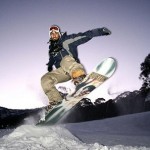 Of course, without the commercial backing these slopes take skiing back to basics. There are small lodges with bunk beds and communal dining rather than resorts, and primitive rope tows rather than high tech chair lifts. This no frills experience has a way of bringing skiers together though, as they all pitch in to wash dishes and socialize on the slopes.
While the social aspect is appealing, these slopes are also a lot quieter than the commercial fields. You won't need to worry about bumping into other skiers, and the runs are usually fresh.
Club memberships typically cost around $300 a year, including season passes and discounted accommodation, with all meals and ski and boarding lessons thrown in. If you're only in New Zealand for a short time consider a day pass for around $60, about $30 less than you'll pay at the commercial ski fields. Alternatively you could pick up
Of course, without the commercial backing these slopes take skiing back to basics. There are small lodges with bunk beds and communal dining rather than resorts, and primitive rope tows rather than high tech chair lifts. This no frills experience has a way of bringing skiers together though, as they all pitch in to wash dishes and socialize on the slopes.
While the social aspect is appealing, these slopes are also a lot quieter than the commercial fields. You won't need to worry about bumping into other skiers, and the runs are usually fresh.
Club memberships typically cost around $300 a year, including season passes and discounted accommodation, with all meals and ski and boarding lessons thrown in. If you're only in New Zealand for a short time consider a day pass for around $60, about $30 less than you'll pay at the commercial ski fields. Alternatively you could pick up